Many brands come with the same complaint: their ad visuals already look good, the design is clean, the colors are attractive, and everything is even handled by a well-known agency, yet the impact still feels ordinary. Awareness may appear, but the emotional pull that makes audiences feel convinced and trust the brand often fails to materialize. So, what do true examples of persuasive advertising look like?
In today’s fast-moving digital era, audiences are used to scrolling, skipping, and closing ads within seconds. As a result, the standard for visual persuasion has shifted. Content that is merely “good enough” is no longer enough. Brands are required to appear stronger, bolder, and more convincing within an extremely short window of time.
The question is simple but critical: your ad may be visible, but is it truly noticed? And more importantly, is it convincing?
This is where high-impact media such as Roadside Premium becomes a true differentiator. Not only because of its massive scale, but because it operates within the audience’s psychological space, the space where attention, perception, and trust are formed spontaneously. To understand why this medium is so effective, we need to look at how the human brain actually responds to large-scale visuals in public spaces.
Scientifically, the human brain is wired to prioritize visual stimuli that are large, high-contrast, bright, and unexpected. This mechanism is known as the orienting response—an automatic reaction that causes our eyes to turn toward a stimulus without conscious effort.
In the context of public spaces, large-scale visuals such as premium OOH instantly trigger this response. The eyes don’t need to be “forced” to look; attention locks in naturally.
This is the crucial point: persuasion does not begin with the message, it begins with attention. Without full attention, even the strongest brand message will simply pass by. Roadside Premium works at the most fundamental level of persuasion by securing audience attention first, before the message is processed.
In other words, media is not just a place to display ads. Media is a psychological context that determines whether a message is perceived as credible or ignored.
Source: City Vision
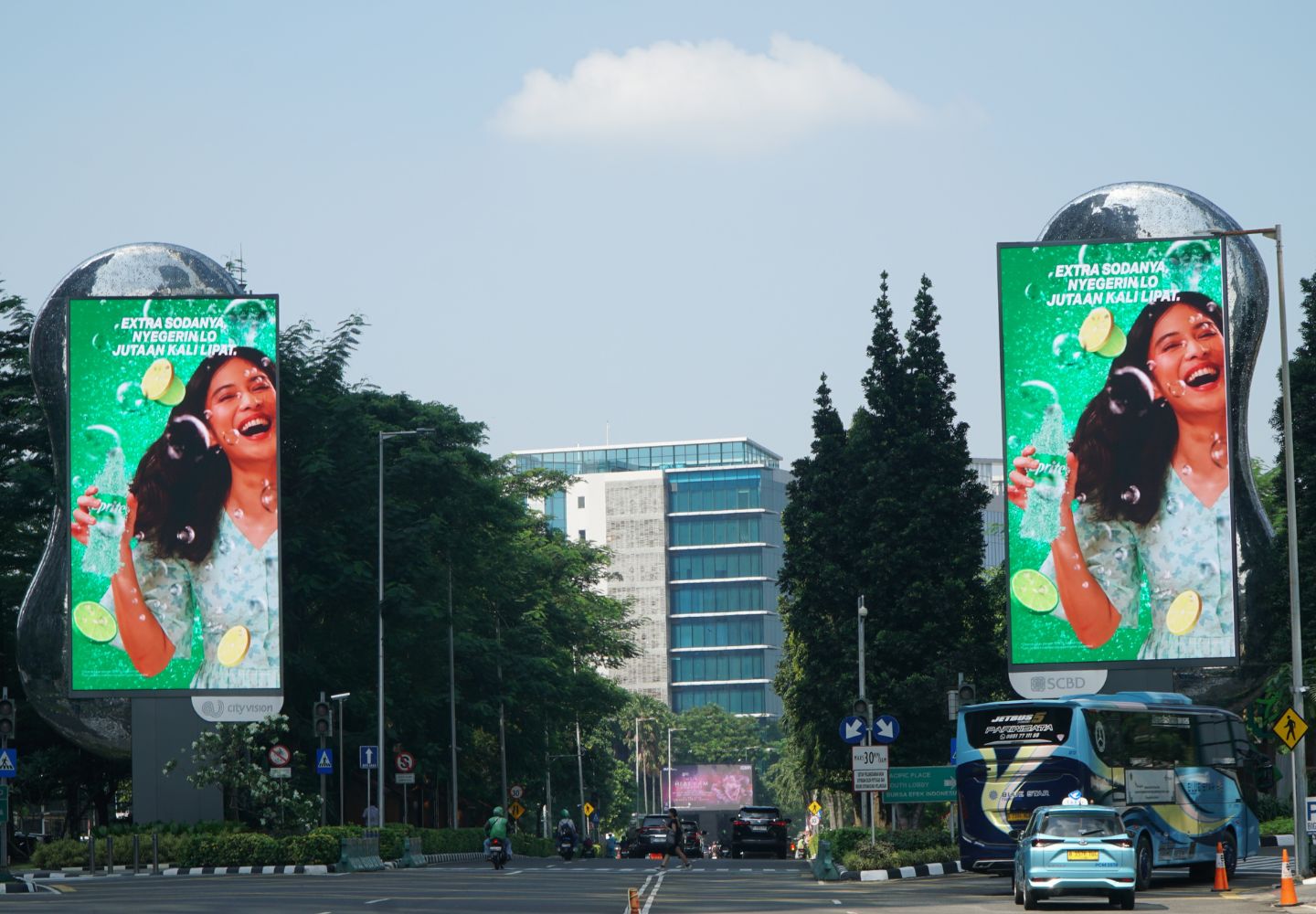
Roadside Premium City Vision is designed to align with how the human brain thinks and reacts.
Large scale creates perceived importance: What appears visually large is often interpreted as important. When a brand dominates the urban landscape, the audience’s brain automatically assigns greater weight to its message.
Elite locations build perceived credibility: Sudirman, SCBD, and major business districts are not just traffic hubs, they are status symbols. Brands that appear there are associated with seriousness, financial strength, and premium positioning.
Repeated exposure strengthens persuasion: Audiences may not make decisions instantly, but daily exposure creates a reinforcement effect. Over time, the brand feels more familiar—and familiarity is often translated into trust.
Unskippable ads create forced attention: There is no skip button. No notification distractions. The message appears in full before the audience, allowing persuasion to work at its optimal level.
This is why Roadside Premium is not merely a medium, but a complete ecosystem of visual persuasion.
Below are the most effective techniques commonly found in examples of persuasive advertising within premium OOH, not as case studies, but as practical concepts.
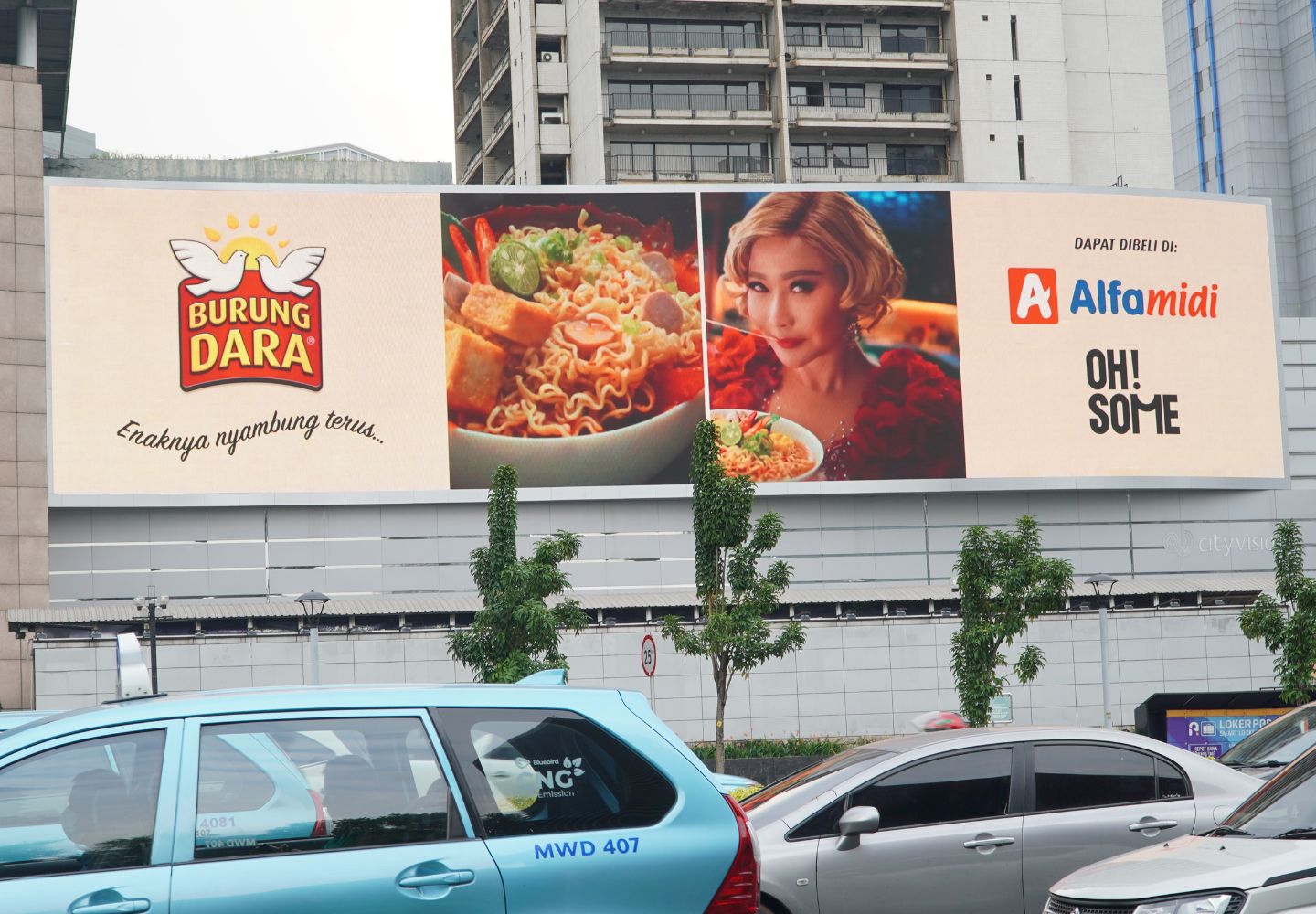
One main element is made significantly larger and visually dominant. This technique conveys authority and confidence. Roadside Premium fully supports visual dominance because its scale is designed precisely for that purpose.
Colors work faster than words. Red triggers urgency, blue builds trust, black creates a premium feel. Roadside Premium City Vision’s LED technology delivers precise color reproduction and high brightness, allowing visual emotions to perform at their best.
Urban audiences move quickly. A single focal point with strong contrast ensures the message is captured within seconds, highly relevant for areas like Sudirman and SCBD.
Short messages are far more persuasive than long paragraphs. Brief, firm, and emotional statements encourage spontaneous decision-making in public spaces.
Visual metaphors allow the brain to interpret meaning without verbal explanation. This technique is extremely effective for high-impact media that relies on instant comprehension.
Principles such as simplicity, proximity, and closure help the brain process visuals quickly. Roadside Premium serves as the ideal canvas for designs that are clean yet persuasive.
Source: City Vision
Visual psychology techniques lose their power when placed in the wrong medium. This is where City Vision’s OOH assets play a critical role.
If persuasion requires focus, Roadside Premium delivers it in full.
When not every brand can appear, those that do immediately seem more trustworthy.
Strong visuals feel significantly more “premium” when displayed in elite locations.
Brand authority makes persuasive messages feel natural rather than forced.
Imagine the process like a short film without lengthy dialogue. In the morning, the audience’s eyes catch a striking color from afar, the first trigger activates. At midday, the dominant hero visual locks attention and associations begin to form. By late afternoon, the concise message is read and small decisions start to take shape in the mind. At night, the premium LED display reinforces the visual, strengthening brand recall.
All of this happens subconsciously. This is the quiet yet consistent ritual of visual persuasion at work.
Some frequent mistakes include:
Overcrowded visuals
Messages that are too long
Lack of contrast
Ignoring visual psychology
Failing to adapt to audience mobility contexts
The solution is simple: simplify, focus, and let the medium work to support your persuasion.
Effective examples of persuasive advertising are not just about design, they are about where and how the message appears. Roadside Premium City Vision combines attention, credibility, and massive scale within a single ecosystem.
When visual psychology techniques are paired with premium space, advertising is no longer just seen, it actively shapes how audiences think and feel about your brand.
It’s time for brands to stop treating OOH as a supporting channel and start viewing it as the core of a serious, high-class visual persuasion strategy.