Every day, millions of people in Jakarta move to the same rhythm. In the morning, they head to work; in the afternoon and evening, they return home through the very same routes. The question is simple: is your brand present on those routes, or does it only appear occasionally and then disappear without a trace?
Many brands are already advertising, even with substantial budgets. Unfortunately, sporadic appearances are often not enough to build memory. Audiences see your ad once, maybe twice, and then their attention shifts to dozens of other messages competing in public spaces.
This is where roadside billboard advertising plays a critical role. It is not just about being visible, but about being present consistently. For urban audiences, memory is not built from momentary surprises, but from repetition that feels natural.
Jakarta is a city with highly predictable mobility patterns. Most commuters travel the same routes up to twice a day, five days a week. Sudirman, Gatot Subroto, and other CBD corridors become continuous “visual stages” passed by millions of eyes every day.
Billboards placed along these routes are no longer just advertising media. They become part of the audience’s visual memory lane. Without realizing it, messages seen repeatedly begin to settle in the mind, creating familiarity.
From this perspective, roadside premium locations can be understood as daily notice boards, spaces where brands show up consistently in the everyday lives of urban audiences.
In neuromarketing, there is a concept known as the Mere Exposure Effect: the human brain tends to like and trust things it sees frequently. Repetition creates comfort. Comfort grows into trust. Trust leads to recall.
In other words, the more often audiences see your brand in the same relevant context, the greater the chance that your brand will be remembered when it matters.
Digital ads can be skipped. Social media content depends on algorithms. Exposure frequency can drop due to ad fatigue.
In contrast, OOH (Out of Home), especially roadside billboard advertising, is unskippable. It exists without barriers, is seen in the real world, and does not rely on small screens or ever-changing algorithms.
There is a fundamental difference between digital frequency and visual frequency in public spaces.
Digital: frequency is controlled, limited, or even stopped
Roadside premium: frequency happens naturally because audiences pass the location every day
Office workers, TransJakarta users, private drivers, and pedestrians all receive the same exposure, daily. This is what makes continuous exposure such a powerful brand memory amplifier.
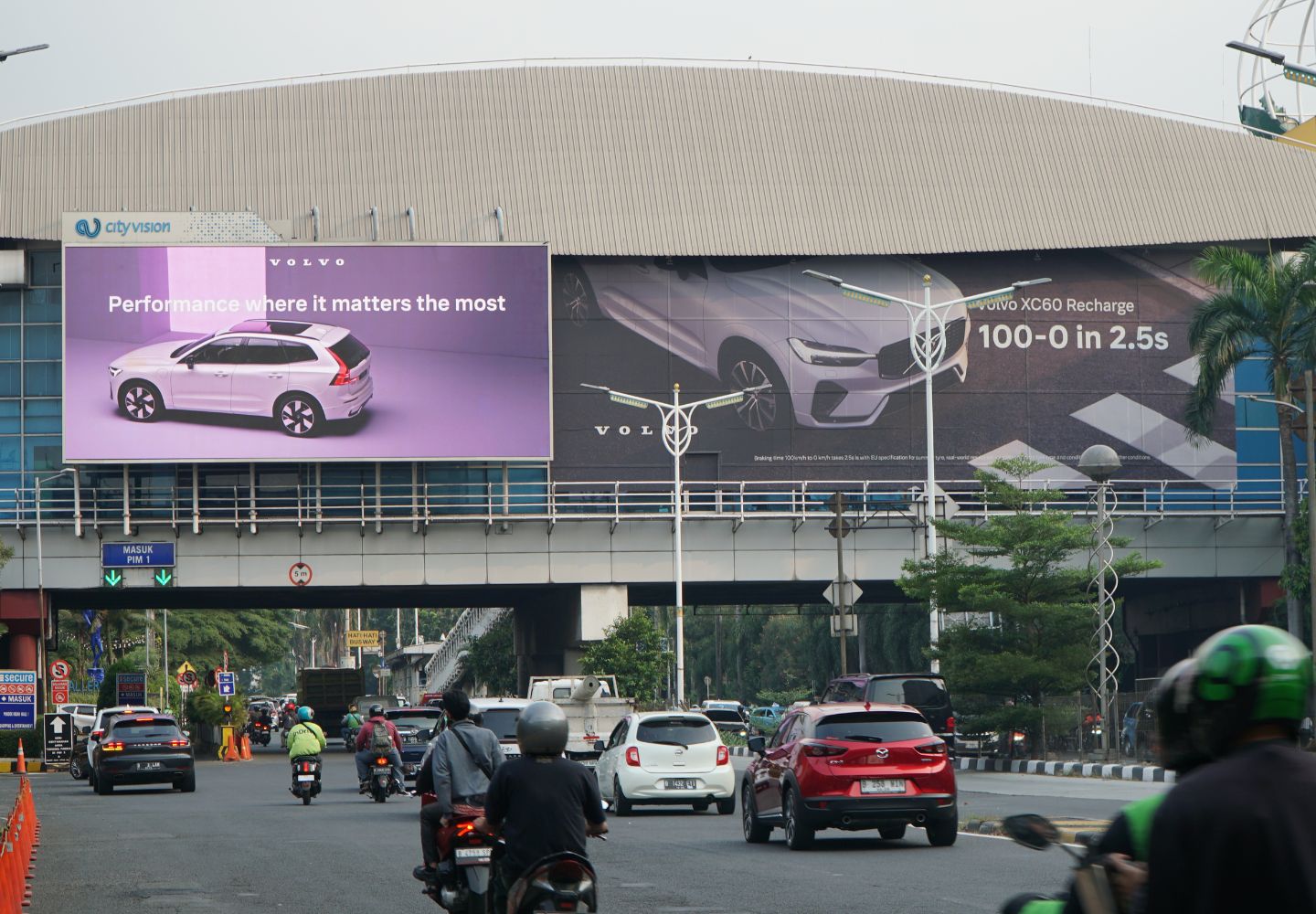
Source: City Vision
Jakarta’s main corridors experience heavy traffic throughout the day, not only during rush hours, but also midday and at night. This means billboards at these points work continuously without pause.
Traffic congestion is often seen as a drawback, but for brands, it is an opportunity. Audiences have more time to look, increasing the likelihood that advertising messages are truly processed.
Brands that appear in elite locations are automatically perceived as major players. Daily exposure in prestigious areas strengthens premium positioning and boosts brand credibility in the eyes of audiences.
City Vision uses high-brightness LED screens with high color fidelity, ensuring visuals remain sharp from morning until night. There are no dim phases that weaken the message.
Each location is selected based on:
high dwell time
stable traffic flow
unobstructed visibility
City Vision understands urban audience movement patterns, not just media placement.
Meanwhile, large-format screens create instant impact. Dominant visuals reinforce brand authority and significantly increase recall potential within seconds. Minimal downtime means exposure is never interrupted. Consistent visuals equal consistent brand presence in public space.
Audiences do not need to “try” to recognize your brand. Daily exposure builds associations automatically.
Colors, logos, and taglines are remembered subconsciously. This is the power of advertising that works over time.
Repeated visual exposure often triggers digital searches. When audiences need a product, the most frequently seen brand is the first to come to mind.
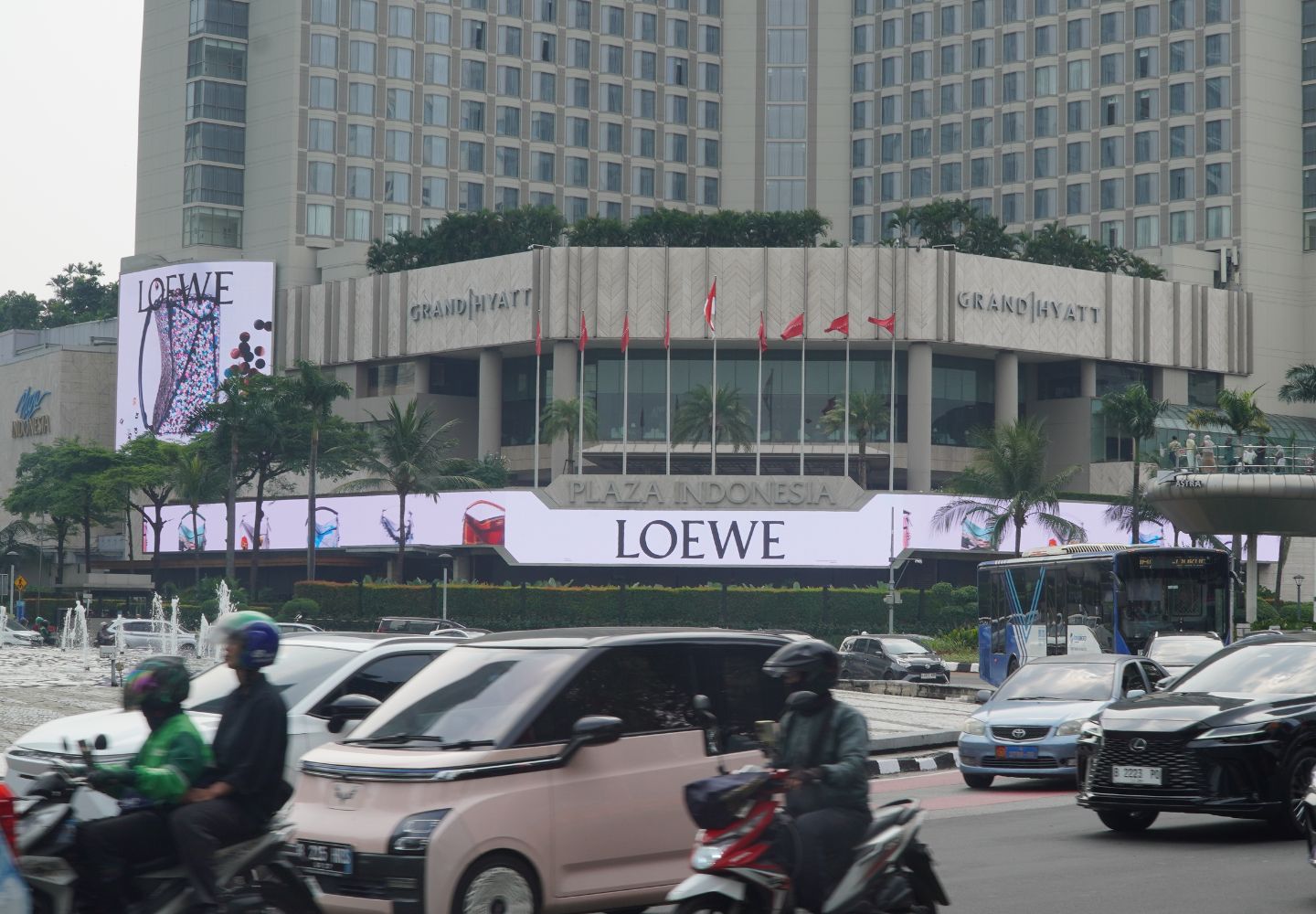
Source: City Vision
Jakarta demands media that cannot be skipped, stays on main routes, and is seen every day by millions. City Vision’s premium roadside billboard advertising meets all of these criteria. It is ideal for brands that want to build real daily brand presence, not just fleeting impressions.
Use simple but powerful designs
Focus on brand colors and symbols
Ensure messages are readable within seconds
City Vision also provides design consultations based on traffic flow and visual angles, ensuring your message performs optimally at every location.
Continuous exposure is not just about appearing often, it is about appearing consistently in the right locations. With City Vision’s roadside billboard advertising, you gain:
premium credibility
maximum visibility
uninterrupted daily exposure
While other brands appear occasionally, make sure your brand shows up every day at Jakarta’s best locations with City Vision.