Imagine you are a brand manager. A substantial budget has been allocated, the advertising visuals are crafted by top-tier agencies, the copywriting has gone through extensive research, and the brand message feels powerful and well-defined. In theory, every element is perfectly in place. Yet once the campaign goes live, the results fall short of expectations. Awareness stagnates, branded search does not increase significantly, and the overall campaign impact feels flat.
More often than not, the issue is not the idea, the visuals, or the message itself. The real problem lies in the advertising location. More precisely, it lies in how the ad is seen by the audience.
In Out of Home (OOH) practice, an ad may be placed on a major road, yet suffer from poor viewing conditions. The billboard might be tilted at an awkward angle, facing the wrong direction, blocked by visual obstacles, or positioned where vehicle speeds are too high. As a result, audiences only glance at it briefly or never truly “see” the brand message at all.
This is where one crucial concept is often overlooked: viewing angle.
For City Vision’s Roadside Premium, advertising locations are not simply about being present on busy streets. They are about how positioning, viewing angles, and visual direction are deliberately designed to ensure brand messages are captured optimally. In OOH, who sees the ad and how they see it, is far more important than simply being visible.
Viewing angle refers to the audience’s line of sight toward an advertising medium as they move. While the concept may sound technical, its impact is highly tangible.
Key factors that shape viewing angle include:
Vehicle approach angle: whether the ad is seen head-on, from the side, or at a sharp angle.
Traffic flow direction: ads must align with the main traffic stream, not sit perpendicular to it.
Ideal viewing distance: sufficient space for the eye to read copy and absorb visuals.
Structure elevation and orientation: billboards that are too high or too low both reduce readability.
Viewing angle determines whether a brand message is:
fully captured,
partially read, or
not read at all.
In the context of advertising locations, even the strongest visual loses its meaning if audiences lack the time and angle to properly absorb the message.
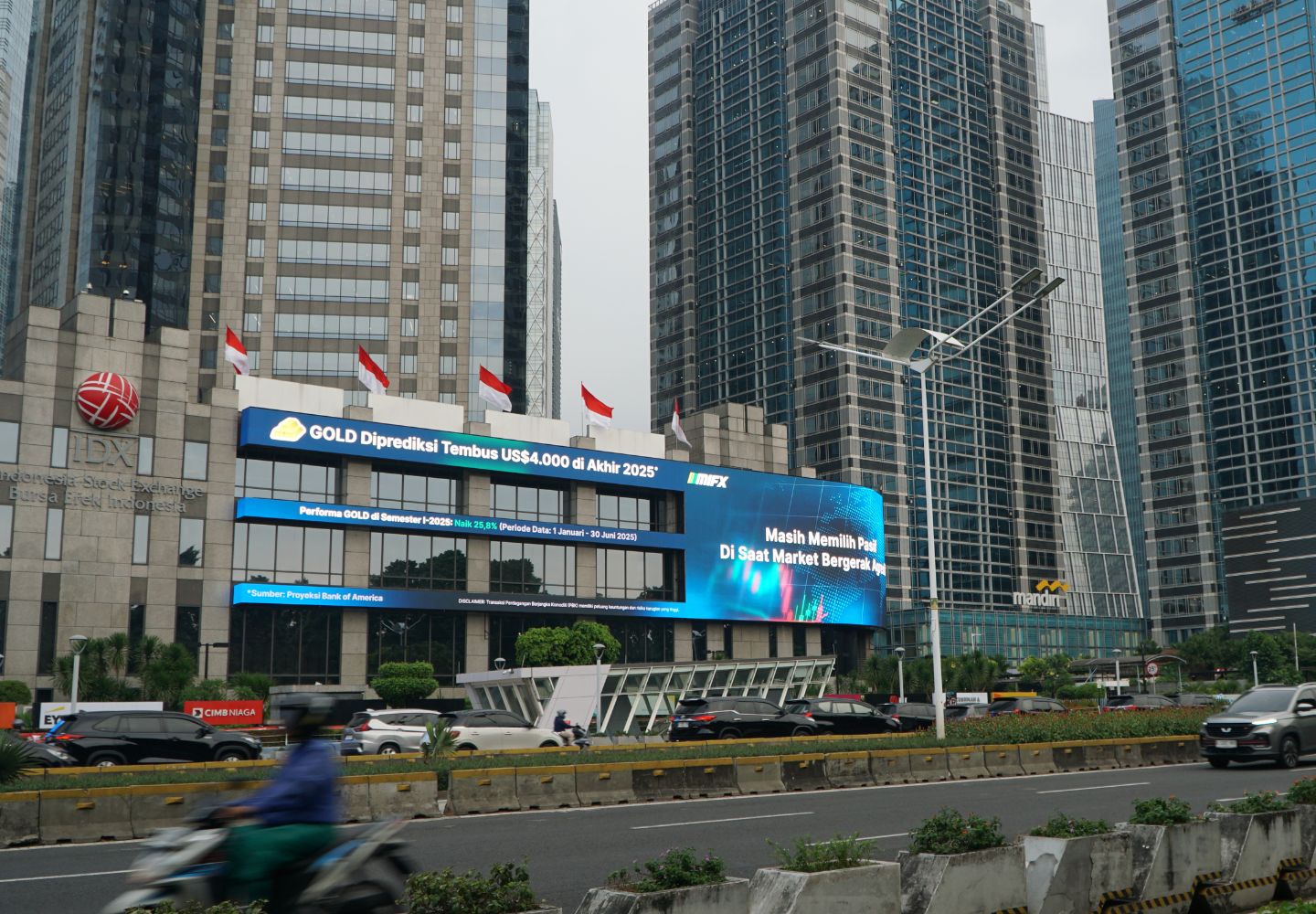
Source: City Vision
Many billboards exist simply because space was available. Roadside Premium by City Vision exists because of strategic calculation. Every Roadside Premium advertising location is curated with careful consideration of:
Road geometry, including curves and vehicle direction.
Daily traffic movement patterns.
Average vehicle speed at the site.
Natural slowdown points such as intersections, traffic lights, or merging lanes.
Commuter gaze direction, where drivers’ eyes naturally focus.
The result is advertising placements that are visible from a distance, enter the field of vision early, and remain in view longer. Not merely “seen,” but truly absorbed.
With a premium viewing angle, the ad becomes readable even before vehicles approach closely. Audiences have time to process the visual, read the headline, and grasp the core message. The message does not appear abruptly but flows naturally into their awareness.
Ads with optimal viewing angles remain visible for several full seconds. This is vastly different from ads that flash by in a fraction of a second. In OOH, a few extra seconds can make a significant difference in brand recall.
Optimal viewing angles ensure:
no visual distortion,
minimal background clutter,
no obstruction from surrounding elements.
The brand does not blend into its environment. Instead, it becomes the primary focal point.
Advertising locations with perfect viewing angles are extremely limited. As a result, brands featured here are perceived as exclusive. Audiences intuitively sense that the brand was chosen, not simply filling empty space.
Dominant positioning creates a perception of strength. Brands that appear on Roadside Premium communicate confidence and scale. The non-verbal message is clear: this is a serious, established brand.
With viewing angles aligned directly to audience sightlines, these ads are difficult to avoid. Viewers inevitably encounter the brand message. Truly unskippable.
The combination of selective advertising locations and optimal viewing angles positions brands as market leaders. City Vision consistently places brands on Jakarta’s prime visual stages.
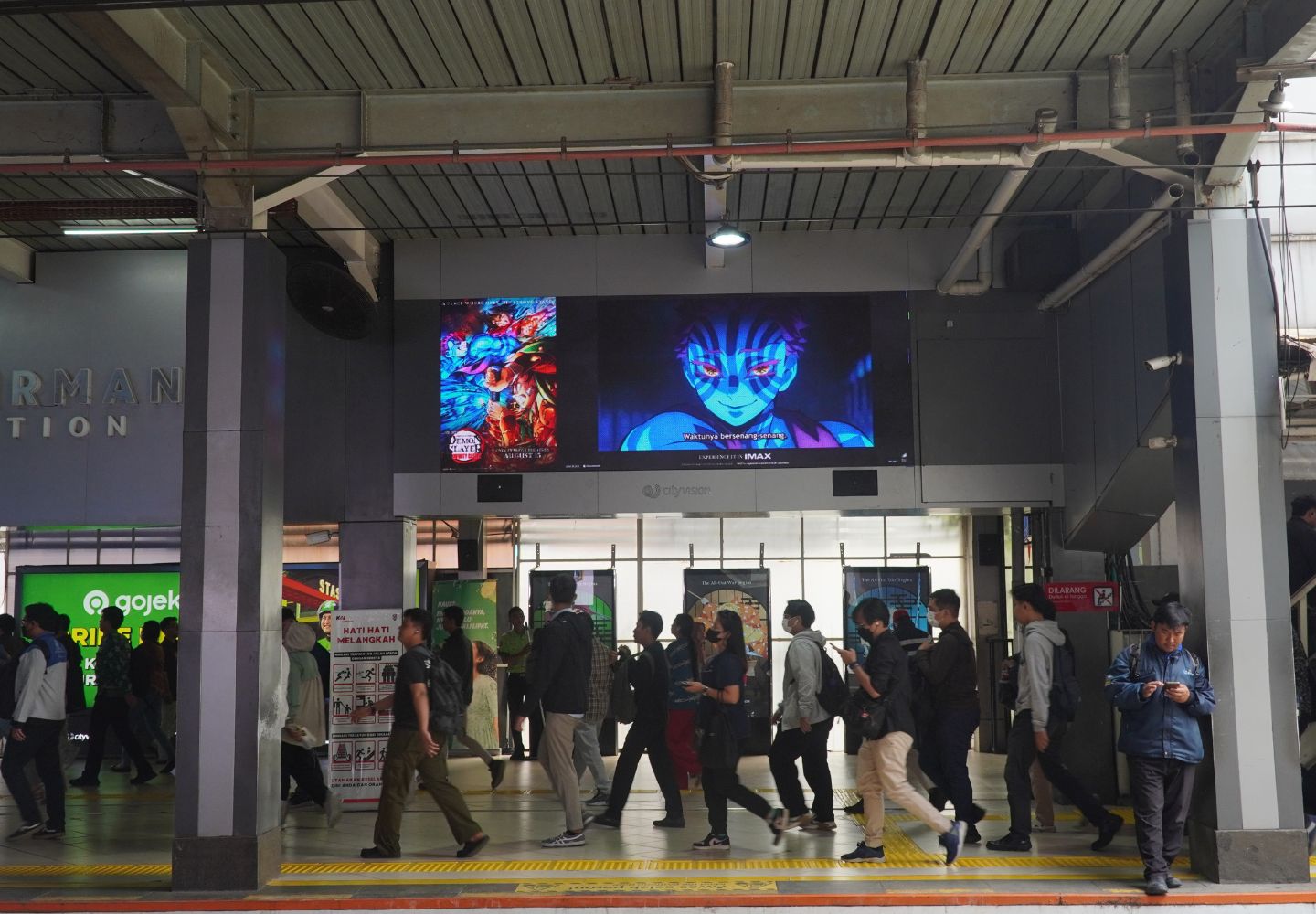
Source: City Vision
City Vision applies a technical approach that remains audience-centric:
Billboard orientation follows dominant traffic flow, not land shape.
Structure height is adjusted based on fast or slow traffic conditions.
Designs avoid dead angles, ensuring consistent visibility.
Lighting and brightness are calibrated to maximize readability from primary viewing angles.
All decisions serve one goal: ensuring brand messages remain clear within real-world audience movement.
With the right viewing angle:
Copy is easier to read.
Calls to action stand out.
Key visuals sit within priority viewing zones.
Brand messages feel clearer, stronger, and more memorable. Compared to non-premium advertising locations, the difference in audience perception is substantial.
OOH no longer operates in isolation. Audiences who clearly see an ad are more likely to:
remember the brand,
search for it online,
and engage further through digital channels.
The better the viewing angle, the stronger the memory trigger. City Vision’s Roadside Premium acts as a catalyst for increased branded keyword searches in today’s search-driven marketing landscape.
If you want to select advertising locations strategically, consider the following:
Choose locations that face primary traffic flow, not side angles.
Avoid sites with excessively high vehicle speeds.
Look for areas with natural slowdowns.
Use structures with ideal elevation.
Ensure the billboard does not face low-traffic zones.
The right location will always outperform a location that is merely busy.
Viewing angle is not merely a technical detail, it is the foundation of OOH effectiveness and brand perception. Advertising locations designed without proper viewing angle considerations risk allowing brand messages to disappear into the streetscape.
With City Vision’s Roadside Premium, locations are carefully selected, angles are curated, and positioning is engineered to make brands the most visible and the most memorable. Contact the City Vision team today and place your brand in premium roadside advertising locations that truly perform.